The empire of normality
Neil Trainis,
18 Aug 2026 4 Min
4 Min

Neil Trainis,
18 Aug 20264 Min
Neil Trainis,
18 Aug 20264 Min


Anyone who works in a pharmacy knows diagnoses for ADHD and autism have increased in recent times. But what is ‘normal’ and how is the definition changing, asks Peter Kelly?
It is very rare for me to read something and for it to completely change my perspective on something and I always marvel when it happens.
Years ago, it happened to me when I read Thinking, Fast and Slow by economics noble prize winner Daniel Kahneman. And more recently, it happened when I read Empire of Normality: Neurodiversity and Capitalism by Robert Chapman.
I always believed school was a place of learning. You go to school to learn. That’s what I thought it was and that is essential to what we are told it is.
However, after reading Chapman’s book, I no longer believed that. I now believe school is somewhere we go to get assessed and segregated. We go to school and we get broken up into two groups; those who have an economic use and those who don’t.
Chapman doesn’t even say that explicitly in the book but that was the lasting impression I came away with after reading it.
Experiences of those who fail school and get failed by school
When we think about and talk about the school system, the emphasis is always on the winners. Newspapers interview people who did well, we talk about who is going where to university and TV stations sometimes talk to those who got top marks.
But we never really give much thought to the experiences of those who fail school and get failed by school. It was only though reading this book that I finally got some idea at how torturous, psychologically, school can be for so many people.
Why do so many people end up on the streets living for the temporary release and escape of drink and drugs?
When you understand the mechanism of how capitalism needs to assess and segregate us into people who are of economic use and people who aren’t, you completely see how so many people end up living that type of life.
It’s an outcome deeply embedded in the system. You go to school full of life and very quickly you start to being told you are not good enough, you are not ‘normal’.
And if you are not normal, there is no place for you within our economic system which is the system that dominates all our lives now.
In his book, Chapman shows us how this has not always been the case and how, prior to capitalism conquering the world, communities designed roles for everyone based on their capabilities. It pinpoints the people and ideologies that started to come up with narrower and narrower definitions of what normal is to serve capital.
Anyone who works in a pharmacy will have seen how diagnoses for ADHD has increased in recent times, as has autism diagnoses. What is normality and how is the definition always changing? If you can’t focus and concentrate for six to eight hours a day doing mundane, boring work that serves capital, then does that mean you are not normal?
Felt uneasy about how many people we exclude from society
Chapman is a neurodivergent philosopher and I think his book is a must-read for anyone who ever felt uneasy about how many people we exclude from society. It’s also a must-read for anyone who is curious about why neurodivergent diagnoses keep increasing.
Reading this book reminded me of the Franz Kafka novel The Castle. When you are excluded from society, there is really no way in. There is just constant confusion, misinformation and dead ends to pursue.
We live in such a ruthless and exclusionary society but we often don’t see the forest from the trees as we are so busy trying to cling on ourselves as best we can. This is another part of the design. Capital wants us working for it and does not want us questioning the system that serves it.
The great Indian writer Arundhati Roy said writers scare the establishment when they bring clarity of description to injustices and once you see them, you can’t unsee them.
I will never view campaigns for disability rights in the same way after reading Chapman’s book and I now agree with him that neurodivergent liberation is possible and is a fight whose outcome can benefit us all.
I myself have dyslexia and while I did well at school, I was very fortunate that I just happened to be very gifted at maths. I often found school to be a very frustrating experience.
I often felt like a circular shape that was being pushed through a square hole, which could not fit through like a toddler’s learning toy. And yet I would largely be deemed by the system as ‘normal’ and ‘economically useful’, so I was well treated.
I can’t imagine how frustrating it must be for neurodivergent people who are not good at school and get branded early on as part of the ‘surplus people’, that the system is required to function in its service of capital.
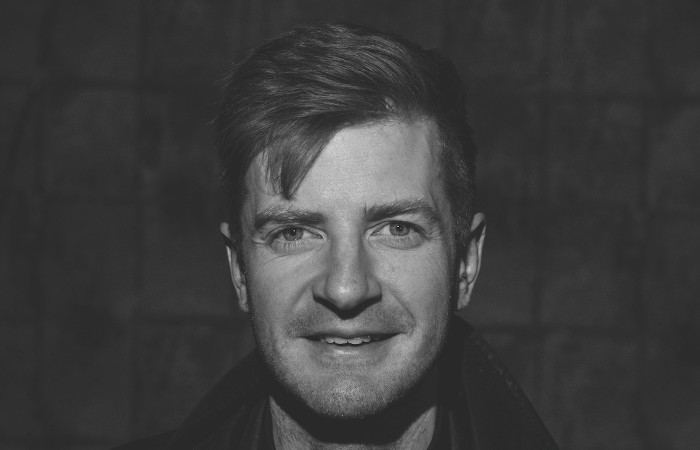
Peter Kelly is a pharmacist based in London and a stand-up comedian.