Industrial, nuclear, terrorist incidents…all in a day’s work
Nick Kaye,
24 Aug 2026 4 Min
4 Min

Nick Kaye,
24 Aug 20264 Min
Nick Kaye,
24 Aug 20264 Min


NHS England expects pharmacies to help people caught up in industrial, nuclear and terrorist incidents. But what is being asked of us raises big moral questions, says Nick Kaye…
I have said many times that community pharmacy is, as the title suggests, at the heart of the communities we serve and a vital part of the health care landscape. But what would happen if that community was hit by a tragic critical mass causally event?
I was really intrigued to read an article recently in Independent Community Pharmacist (ICP) magazine which talked about this very subject. It highlighted that NHS England had said that pharmacies should help people caught up in industrial, nuclear, and terrorist incidents. I would also assume natural disasters, such as flooding as well.
I think what this shows now is the NHS does think of community pharmacies as part of the infrastructure that needs to be maintained in a critical incident.
I think this shows real progress in ‘system thinking” in terms of how important you and your teams are. This, in my view, will be built on the way we all stood up during the Covid pandemic and as one of the pharmacists who was cross-examined by the UK Covid inquiry, I was both amazed and humbled to read the evidence that was submitted and relive the extraordinary things we all did during the hardest of times.
So, I can see why we are now viewed as critical in times of extreme events. However, it does raise some questions.
As experts in medicine and medicines supply, pharmacies would be key
What I noticed in the ICP news article was NHSE did not say what was expected of pharmacies and how that response would be monitored. And that does raise questions about what is actually being asked of us.
It’s well known in any disaster response as stated in the international humanitarian response framework coordinated through the United Nation's cluster system and the Sphere minimum standards, that water, food, shelter and health/medicine are the four pillars of any major emergency response.
And as the experts in medicine and medicines supply, pharmacies would be key. But what is being asked also raises questions professionally, financially and morally and those are really, really big questions.
I believe most of us, if faced with a really difficult situation, would be afraid but we would step up. It made me think has community pharmacy been involved in an event like this in the recent past?
I was moved to find a quote from a pharmacist who responded to the Manchester Arena bombing in 2017. Khalid Ahmed is quoted as saying: "There were kids crying and people were traumatised and in shock. I had conversations with over 100 people. It was a tiring experience but a worthwhile one."
Khalid also said: "Being a pharmacist is not just a nine-to-five job. It was traumatic, but you have to take it on the chin."
I thought that was an amazing response to a horrific event. I’m sure we would all want to think that we would show the same bravery as Khalid did but read those quotes again.
From a human-being and professional point of view, it really felt like a tough place to be but what grace in the face of tragedy. The examples of Covid and the Manchester Arena bombing are both traumatic events and they require bravery.
Given the importance placed on medicines supply, we assume NHSE’s ask is similar in both situations, which is to keep people reassured and keep the supply of their critical medicines flowing to them. If we accept that one situation is acute and the other is much more sustained, lasting months, they bring different operational challenges.
It is important to say, and we must recognise, that some people may not be able to take part in such a response for legitimate health reasons and that raises the question ‘should this type of action be expected of us?’
What would happen if we couldn’t step into this difficult and challenging space? Those of us who can’t, in my view, should not be punished. These are exceptionally difficult decisions to make. They are frightening and potentially life-changing if they go wrong.
I believe it was Nelson Mandela who said: “I learned that courage was not the absence of fear, but the triumph over it. The brave man is not he who does not feel afraid, but he who conquers that fear."
Therefore, in my view, it is credit to us all that NHSE now recognises community pharmacy as a critical part of any mass casualty response, given the vital role we play in healthcare provision. However, this should be a request, not an expectation.
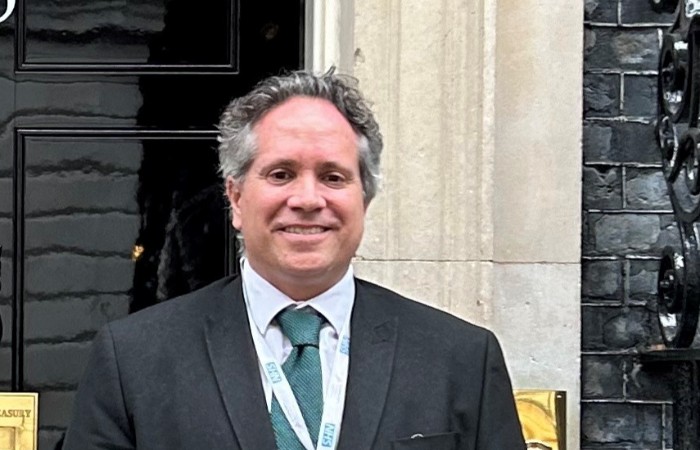
Nick Kaye is a National Pharmacy Association board member and pharmacist based in Newquay. These are his personal views.