Ambition, not retreat!
Neil Trainis,
22 Sep 2026 6 Min
6 Min

Neil Trainis,
22 Sep 20266 Min
Neil Trainis,
22 Sep 20266 Min


A community pharmacy network confined to acute and self-limiting presentations while nursing and primary care pharmacy inherit long-term condition management by default, is not an independent prescribing vision worth working towards, insists Hemant Patel…
In an article published by Independent Community Pharmacist recently, Avon and Wiltshire’s chief officer Richard Brown was right that independent prescribing is not the finished product.
But he is wrong about what should be built next. His answer, that community pharmacy should confine itself to acute, uncomplicated, self-limiting conditions and leave long-term condition management to others until the NHS builds perfect infrastructure around us, is not caution.
It is a strategy for managed decline and the evidence he cites to support it argues, on close reading, for the opposite conclusion.
Here is where his argument fails, point by point.
1. The infrastructure excuse does not survive contact with the rest of primary care
Brown's central claim is that safe long-term condition management requires comprehensive read-and-write access to GP records, integration with primary care systems, phlebotomy participation and robust monitoring mechanisms, and that until these become routine across community pharmacy, we should not overextend ourselves.
Nobody waited for that infrastructure to arrive before extending scope into chronic disease. Nurse independent prescribers grew from 47,595 in March 2020 to 69,061 in March 2025. Now, the clear majority of all non-medical independent prescribers in the UK are managing long-term conditions daily.
Primary Care Network clinical pharmacists grew from a few hundred in 2019 to more than 8,000 by 2026, the largest single additional roles reimbursement scheme staff group in general practice, doing structured medication reviews and chronic disease management as core business.
Both professions built the infrastructure by doing the work inside general practice, not by waiting outside it for an invitation.
The honest conclusion is not that community pharmacy lacks the foundations for chronic disease management. It is that community pharmacy has been commissioned and located outside the record-sharing and governance arrangements that nursing and PCN pharmacy already sit inside.
That is a commissioning and governance problem to be fixed, not a capability ceiling to be accepted.
2. Freeing general practice for complexity is precisely the wrong gift right now
Brown frames the payoff of his acute-only model as freeing general practice to concentrate on what it does best: managing complexity, multimorbidity and long-term conditions. That would be a reasonable trade if general practice had capacity to absorb it. It does not.
There were 29,057 full-time equivalent (FTE) fully qualified GPs in England in July 2026, 307 fewer than in September 2015, while the registered patient population grew by 6.3 million, 12 per cent, over the same period. Average patients per GP is now 2,176, up 238 since 2015.
The Health Foundation puts the additional GP requirement at 6,500 FTE by 2031-32 just to meet demand already in the system.
Handing the entirety of long-term condition management back to a shrinking GP workforce, at the precise moment that workforce is haemorrhaging capacity, is not a strategy for the NHS. It is a strategy for waiting lists.
If community pharmacy declines the chronic disease opportunity, it will not go to general practice. It will go to nursing and PCN pharmacy, the two workforces already growing fastest into that space.
Brown's vision does not protect general practice. It protects nobody, and it hands the ground to competitors within the multidisciplinary team who are not hesitating.
3. His own precedent argues against him
Brown cites the NHS pharmacy contraception service as proof that imperfect funding models get fixed over time and uses this to counsel patience. Read the sequence correctly and it says the opposite.
The funding was reviewed and improved after pharmacists had already delivered the service and demonstrated its value under an imperfect model. Nobody paused delivery until the fee structure was right.
The lesson of his own example is that you win the infrastructure and the funding by doing the work, not by declining the work until the conditions are ideal.
The same is true of independent prescribing itself. It exists today because the Pathfinder Programme demonstrated capability under exactly the imperfect, evolving conditions Brown now cites as a reason for further restraint.
Ambition preceded infrastructure at every step that matters. There is no version of pharmacy's history that supports waiting for perfection before extending scope.
4. Acute-only is not a clinical strategy. It is a commercial death sentence
This argument cannot be assessed in isolation from the state of the sector delivering it. England's pharmacy network has shrunk by over 1,000 outlets since 2016, a nine per cent contraction, with closures concentrated in the most deprived areas with the highest health need.
Independent pharmacy surveys report around two-thirds of contractors operating at a loss, with owners routinely subsidising NHS work from personal savings.
A sector in that financial condition cannot survive on a diet of low-margin acute consultations while ceding the higher-value, differentiated chronic disease work to other professions.
Independent prescribing is one of the few genuinely new revenue lines available to community pharmacy contractors. Advising the sector to restrict its use to the acute caseload, while the commercial model is already failing, is not prudent leadership.
It is advice that accelerates the closures it claims to be protecting the sector from.
5. The talent will simply leave
PCN pharmacist roles already offer salaried, full-scope clinical practice, with structured supervision and growing prescribing authority, and the sector has been recruiting into that scope at pace even through a recent hiring slowdown.
If community pharmacy leadership formally narrows the profession's ambition to acute, uncomplicated presentations, the pharmacists most capable of chronic disease management have every professional and financial incentive to migrate into PCNs, primary care or private prescribing services outside the community pharmacy contract altogether.
That is how visionless leadership becomes self-fulfilling. Not because community pharmacists lack the clinical ability Brown himself concedes they have, but because the sector's own leadership told its most capable people, in print, that their ambition did not belong there.
6. Cock-eyed leadership: the young are already voting with their feet
This is not a hypothetical risk. It is already happening and the numbers make Brown's caution look worse, not better.
Only 31 per cent of community pharmacists expect to still be working in a salaried or contractor community role in five years' time, and 16 per cent expect to have left pharmacy altogether.
Against that, 72 per cent of pharmacists working in general practice or PCN roles expect to still be in that sector in five years. Sixty-five per cent of community pharmacists think it at least quite likely they will leave the sector within five years, and average job satisfaction in the sector sits at 5.6 out of 10.
Among those actively weighing a move, general practice and PCN roles are the single most popular destination, cited by half, with better work-life balance, more opportunities to use clinical skills, and improved pay named as the deciding factors.
Pharmacy students still choose community pharmacy as their first preference on qualifying, drawn by early exposure and the appeal of eventual ownership. But a materially smaller share stay once they see what the job delivers against the alternatives.
The labour market, not the initial preference, decides where the profession's talent ends up. This is what makes Brown's intervention cock-eyed rather than merely cautious.
Read publicly, by students and newly registered pharmacists deciding where to build a career, his article tells them that community pharmacy has chosen, voluntarily, to be the lower scope, more financially fragile branch of the profession, at the exact moment PCN pharmacy is the sector's clearest growth story in prescribing authority, job satisfaction and pay.
A recruitment and retention crisis already visible in the data is not solved by leadership advising the sector to make itself less attractive to the people it most needs to keep.
What leadership should say instead
The infrastructure gap Brown describes is real. The response to a real gap is a governed, resourced plan to close it fast, not a public statement of restraint that removes the pressure to close it at all.
That means pushing now for GP Connect and shared care record access at scale for community pharmacy, commissioning pilot pathways for defined long-term conditions with built-in monitoring and governance and treating independent prescribing as the forcing function that wins the infrastructure, exactly as Pathfinders won IP itself.
The autumn launch of NHS independent prescribing is, as Brown rightly says, the destination. But the destination he offers, a network confined to acute and self-limiting presentations while nursing and PCN pharmacy inherit long-term condition management by default, is not a vision worth working towards.
It is an abdication dressed as strategy and community pharmacy cannot afford another decade of leadership that mistakes caution for wisdom while the ground it should be occupying is taken by everyone else willing to move first.
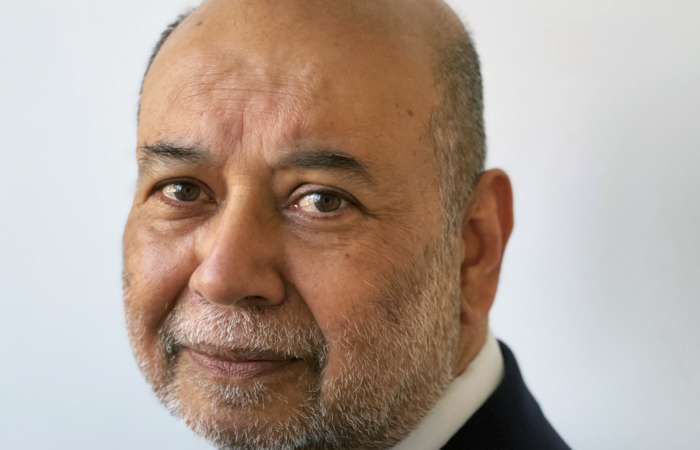
Hemant Patel is a four-time former president of the Royal Pharmaceutical Society.