NPA Essential: August 2026
Neil Trainis,
03 Aug 2026 10 Min

Neil Trainis,
03 Aug 202610 Min
Neil Trainis,
03 Aug 202610 Min


This month's news from the National Pharmacy Association...
We can’t be replaced by drones!
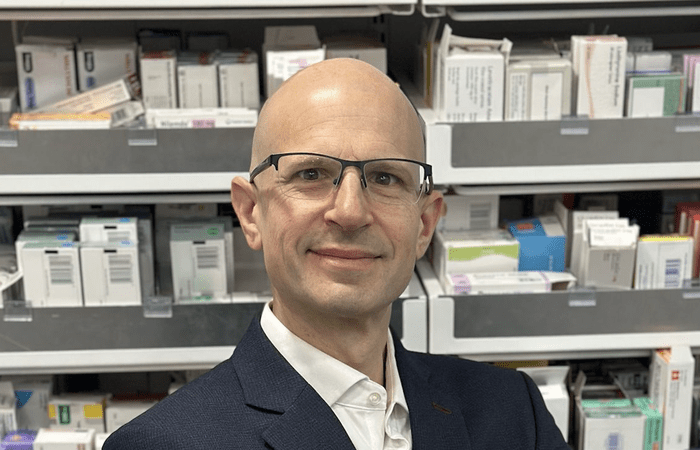
By NPA chair Olivier Picard...
I publicly challenged the chief executive of NHS England, who suggested at a conference that in the future it will be unusual to go to a pharmacist to get medicines – instead the majority of medicines could be delivered by drones. In my view, it’s implausible that community pharmacy’s place in the medicines supply chain could be successfully replaced by a cloud of Amazon drones! While it’s natural that the NHS should want to achieve e ciencies by optimising the use of technology, a face-to-face relationship between health professionals and patients will always be an important aspect of quality care in the community, which includes the pharmacy network.
More than a service Dr Penny Dash’s comments fundamentally misunderstand what community pharmacy does. Community pharmacy is not simply a distribution network for medicines that can be replaced by drones or courier deliveries. Every day, pharmacists identify prescribing errors, intervene to prevent harm, support patients with complex medicines, and provide reassurance and clinical advice at the point medicines are supplied.
We welcome innovation and embrace technology where it improves patient care. Automation, robotics and digital tools all have an important role to play. But technology should support the relationship between patients and healthcare professionals, not replace it.
The future of pharmacy is more clinical care in the community, not less human contact. Separating medicines from the professional oversight that accompanies their supply risks weakening one of the NHS’s most accessible and trusted services. Our members want to use technology to spend more time caring for patients, not to see community pharmacy reduced to a warehouse and a delivery network.
Independent prescribing research
A report published in July by Thiscovery and the National Pharmacy Association (NPA) shows that the majority of community pharmacists strongly support the expansion of independent prescribing in community pharmacies – but face a number of structural obstacles, especially inadequate NHS funding and only limited access to patient records.
Patients told researchers that they wanted good information sharing between pharmacies and GPs – meaning their full history would be available to the prescribing pharmacist, that any prescription would be recorded and that their GP would be aware. The NPA commissioned in-depth analysis of attitudes to prescribing, by pharmacists, patients and other healthcare professionals, as part of a project mapping the opportunities for pharmacy prescribers to better serve patients, take pressure off the wider NHS and provide medium and long term opportunities to develop pharmacy businesses.
The NPA believes that this project will be highly signifi cant in terms of informing the development of community pharmacy patient care and prescribing practice in the NHS.
Key findings of three surveys – each commissioned by the NPA and carried out by health research specialists Thiscovery – include:
• 84 per cent of pharmacists participating in the research felt expanding prescribing would improve access to timely treatment
• 70 per cent of patients who had not already had a pharmacist prescription said they would be happy to have a pharmacist prescribe medication for them
• The majority of commissioners and non-pharmacist professionals (64 per cent) felt pharmacy prescribing would improve access
• Lack of funding and limited access to IT services and patient records remain a central barrier to expansion.
Senior figures from the NHS, pharmacy leaders, patient representatives and specialist health policy researchers from across the UK gathered in London to validate fi ndings from the research and to start mapping out practical recommendations for government and NHS commissioners. They were asked how the findings compare with their own experience and what was missing in the data.
They also considered what were the priority actions needed to support safe and sustainable pharmacist prescribing. The NPA is leading work to create a practical framework and roadmap for pharmacist independent prescribing to support the NHS 10- year plan, create business opportunities and offer practical support and advice to the pharmacy community.
Sukhi Basra, NPA vice chair, who chaired the roundtable, said: “Prescribing has transformed the way I am able to serve my patients and this research shows it has the potential to have a huge positive impact on patients and the NHS across the country – bringing care out of hospital and into the community as more and more pharmacists qualify as prescribers.
“The NPA has strongly argued that these opportunities require proper funding and support across the healthcare establishment, but the rewards for patients, pharmacies and the health system are potentially dramatic.
“We’re conducting this important research and bringing colleagues together across the health system to ensure pharmacies can take advantage of the accelerating number of prescribers in the system, which represents great patient care, great value for the NHS and an amazing opportunity for our profession.”
The project is supported by a generous gift from the NPA Health Education Foundation.
Women pharmacy owners celebrated in Parliament at NPA reception
Women pharmacy leaders gathered in the House of Lords recently, including National Pharmacy Association members, to celebrate the contribution of women in pharmacy to the nation’s health. Approximately 60 per cent of pharmacists and 85 per cent of pharmacy technicians are women.
Speakers at the event were: Health Minister Preet Kaur Gill MP, Baroness Redfern, NPA vice chair Sukhi Basra and Taiwo Owatemi MP, who is currently the only female pharmacist in the House of Commons. Preet Kaur Gill praised women pharmacists for being the “lifeblood” of the community pharmacy workforce.
She called out the problem of aggression towards pharmacy sta by some patients and highlighted progress in improving access to the morning after pill and the human papillomavirus (HPV) vaccine. While recognising that the fi nancial uplifts in the England pharmacy contract do “not constitute a silver bullet” to the sector’s challenges, she insisted that “we are laying the foundations for an historic shift from hospital to community”.
Talking after the event, Sukhi Basra said: “We gathered to celebrate the contribution of women in pharmacy, but also to give a boost to female pharmacy leadership in the sector, by bringing people together to learn from one another and establish networks of mutual support.
“I had the opportunity to tell my own story about becoming a pharmacist and my journey to becoming vice chair of the National Pharmacy Association – standing on the shoulders of wonderful women who have served in leadership positions before at the NPA and elsewhere.”
Talking contract reform, with government
Senior NPA staff went to the Department of Health and Social Care to present on pharmacy contract reform. We’ve analysed pharmacy funding arrangements across the world to inform government thinking and show what works and what does not.
So, for example, Sweden has lost much of its pharmacy network through central dispensing, but is now struggling with medicines optimisation and local support for patients – the network is hugely valuable, particularly in deprived areas where pharmacies are most at risk.
The analysis also shows that Britain is the only country on earth with a free market medicine pricing system – heaping risk on the pharmacy network.
NPA advocacy - minimum wage
We submitted evidence to the Low Pay Commission, which is considering minimum wage recommendations for April 2027. We highlighted a survey of NPA members in June 2026, which showed that the National Living Wage added to existing financial pressures for 90 per cent of independent pharmacies. 66 per cent of respondents said that they were being forced to reduce opening hours and sta ng as a result of wage infl ation.
We believe the survey data we supplied to the Low Pay Commission is persuasive, as it is rooted in the challenging realities of the pharmacy front line.
Meeting with shadow health secretary
We met Shadow Secretary of State for Health and Social Care, Stuart Andrew MP, to highlight continued NHS under-funding of the pharmacy contract; the opportunity to transform medicines adherence through community pharmacy; and the Health Bill.
Andy, devolution and community pharmacy: A match made in heaven?
Sygy Collins, from NPA External Affairs, on the arrival of a new Prime Minister in Downing Street...
Andy Burnham’s political dogma is devolution, devolution, devolution. But what does this niche and nerdy word have to do with community pharmacy, and how will it affect us?
For community pharmacy, this presents a major opportunity. Whether as Mayor of Greater Manchester, Brown-era health secretary, or now as a prime minister in ascendancy, his central argument has remained consistent: decision-making and power should be retained locally.
Burnham’s politics are not built around abstract, academic, loquacious discussions of policy reform. Tangible projects His politics are built around tangible projects and programmes in the community that people can see - high streets thriving, buses arriving on time, and local preventative services that combine health and care to help before a crisis hits.
This is exactly where community pharmacy fits. Community pharmacy is the most accessible part of the health system. We sit on both urban and rural local high streets, we are known in the neighbourhoods, and trusted in communities that often struggle to access other forms of care.
We provide prevention, minor illness support, medicine advice, vaccinations, emergency contraception, blood pressure checks, smoking cessation support, long-term condition support, and signposting to other services such as addiction and domestic violence support. In other words, community pharmacy is already the kind of neighbourhood health infrastructure that Burnham’s Mancunian “Live Well” model values.
The opportunity: pharmacy as a visible neighbourhood health infrastructure. Greater Manchester’s place based Live Well approach champions the view that health is shaped not only by primary and secondary care provision, but also by community support and early intervention.
This is why it is imperative that community pharmacy is the cornerstone of the government’s shift from hospital to community care. Andy Burnham is likely to turbocharge this initiative. Burnham has described Manchester as a ‘prevention demonstrator’ for the government’s 10 Year Plan for England. Manchester is currently promoting its Neighbourhood Moves initiative to help those in areas of greatest need get active in accessible ways and reconnect with local green spaces and trails.
Live Well has also supported smoking cessation for pregnancy programmes, initiatives to fi ght childhood obesity, and a joint NHS bowel cancer screening programme. Prevention For a government interested in prevention and continuing to work with the ambitions laid out in the 10 Year Health Plan for England, community pharmacy offers a readymade network.
It does not need to be invented from scratch, we just need to be involved in local health planning from the onset and be provided with the right investment and support.
We need to have appropriate representation across Integrated Care Systems and local place-based health commissioning and be viewed as a core pillar of the health system in the upcoming 10-year workforce plan. The case to Burnham is simple: community pharmacy is not the health system’s ‘nice to have’ benchwarmer; we are a core element of the future NHS.
NPA Foundation training packages
If you have a foundation trainee pharmacist starting with you in 2026, we o er a range of foundation training programme options to support with their development and preparation for the common registration assessment. We have a blended package (consisting of the enhanced online course and two face-to-face study days) and two online only options – essentials and enhanced.
Trainees will receive a timetable of dates and have access to a booking calendar as part of the course. Key features of the NPA Foundation training programme
• Online training via the NPA Learning Academy, our intuitive eLearning platform
• Face-to-face study days for the blended programme delivered at a choice of location (London, Birmingham or Manchester)
• Exam support including practice questions, drop-in clinics and calculations guidance
• Mini mock and full mock assessment (depending on the package purchased).
Subject to the chosen package, there is also the opportunity to complete the Medicines Counter Assistant, Leadership and Accuracy Checking training courses. Find out more: npa.co.uk/learning-and-development/courses
NPA pharmacist independent prescribing pack
August has seen hundreds of newly qualifi ed pharmacists hit the register as independent prescribers (IPs). Go to the NPA’s website to download our IP pack to access all the key resources and templates in one place, to support you in developing, delivering, and expanding your prescribing services.
The resources in our IP pack are designed to support pharmacists at all stages of the prescribing journey, and our templates can be easily amended and tailored to meet the needs of individual pharmacist IPs and prescribing services (commissioned and private), including competency assessments, risk assessments and more.
To accompany this we also have a series of webinars on becoming an IP, managing clinical governance and risk in your practice and expanding your scope of practice.
NEW AND POPULAR NPA RESOURCES - available on the NPA Membership Hub
Meningitis B advanced service (England)
The new NHS MenB (Bexsero) Vaccination Service launched on 20 July, offering eligible young people protection against meningococcal B through participating community pharmacies. The NPA has developed a range of resources including an SOP template, vaccination risk assessment, record form, indemnity guidance and FAQs to help pharmacies prepare and deliver the service safely.
PQS 2026/27 (England)
The Pharmacy Quality Scheme (PQS) 2026/2027 has been announced, with £20 million of funding available to support quality improvement across community pharmacies. The NPA has developed practical resources to help contractors complete PQS requirements, including checklists, staff training trackers, and action plan templates, and support for the domains such as medicines optimisation, patient safety and palliative care.
Vaccination services
With the upcoming flu and Covid-19 vaccination season approaching, the NPA has updated key resources to support pharmacies delivering vaccination services. Updates include a risk reduction template and new guidance on vaccine group directions (VGDs).
Data Protection Officer (DPO) requirements (UK)
Each pharmacy needs to have a DPO appointed and their details shared with the ICO. Go to the NPA’s Membership Hub for more information.