Pharmacy highs in Hertfordshire
Neil Trainis,
07 Jul 2026 4 Min
4 Min

Neil Trainis,
07 Jul 20264 Min
Neil Trainis,
07 Jul 20264 Min


Community Pharmacy Hertfordshire has built an enviable record of turning local innovation into national influence. But its chief officer Helen Musson says the work is far from done. Saša Janković caught up with her…
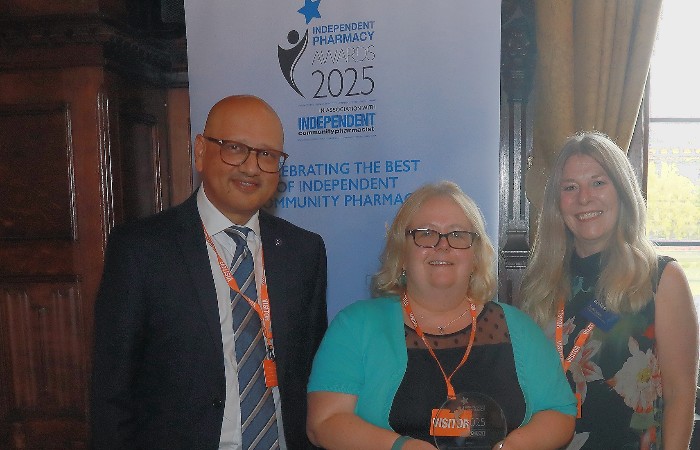
Community Pharmacy Hertfordshire (CPH) is the strategic leader and dedicated local pharmaceutical committee for 220 community pharmacy contractors, delivering impactful, innovative support to contractors, advancing NHS priorities, strengthening integration and improving patient care – for which it won Best Supporting Local Representative Group at last year’s Independent Pharmacy Awards.
According to CPH’s chief officer Helen Musson, what underpins all this work is CPH’s communications strategy, which engages its network through weekly newsletters that reach 750 subscribers, targeted WhatsApp groups that support 308 Pharmacy First members, and strategic social media growth that has seen its LinkedIn followers increase by 39 per cent.
Furthermore, its AGM gathers over 75 attendees from across the sector, while regular webinars covering Pharmacy First, pharmacy quality scheme and contraception, aim to equip pharmacies with up-to-date service delivery insights.
“As a result we saw 99 per cent of pharmacies registering for Pharmacy First by January 2025; 95 per cent for hypertension case-finding; 85 per cent for contraception; and 93 per cent delivering all three services”, says Helen, “with monthly Pharmacy First consultations averaging 22 per site by November last year; and hypertension checks and contraception consultations increasing 88 per cent and 109 per cent respectively.”
CPH has also delivered tools such as cost calculators, training and referral support which led to a two per cent rise in NHS 111 referrals, and the successful rollout of Pharmacy First at Watford Urgent Treatment Centre.
National influence
A standout achievement is its Empowering Integrated Community Pharmacy pilot, launched in 2023.
“By introducing 32 Community Pharmacy Engagement Leads, GPs’ knowledge of pharmacy services improved from 5 to 6.7/10 and GP-to-pharmacy referrals increased by five per cent, potentially saving £32,000 annually”, explains Helen.
This model, now nationally shared, helped influence the integrated care board’s decision in September 2024 to fund 15 permanent Community Pharmacy Engagement Leads to drive local service uptake and integration within neighbourhood teams, placing them on an equal footing with GP Clinical Leads.
Unfortunately, recent ICB amalgamation means the program is currently closed for reassessment. As of April 1, 2026, the Hertfordshire and West Essex Integrated Care Board (ICB) has been dissolved.
The Hertfordshire area has merged with Bedfordshire, Luton & Milton Keynes, and Cambridgeshire & Peterborough to form the new Central East ICB, while West Essex has joined the new Essex ICB.
One voice
Helen is candid that getting community pharmacy properly embedded in the primary care landscape is a persistent challenge, and she has clear views on where the gaps lie.
"I think all of us want to have community pharmacy as a fully integrated part of the primary care voice," she says. "The trouble is, though, that often it's locally defined, and do other providers know about it? You've got to be everywhere, and you've got to be shouting about it, and that's quite hard, depending on how your LPC is structured."
Visibility at the right tables is a recurring theme, and Helen is equally frank about the financial constraints that are stifling local innovation, from which national services have historically grown.
“National services come from local innovation so I do have a bit of a worry about the future, because at the moment, we can't ask our pharmacies to take on more work,” she says.
Looking ahead, Helen sees the emerging provider alliance landscape as both an opportunity and a risk for LPCs.
"We could help oil all the wheels with provider alliances and collaborations, but ultimately we're not a provider company, and we can't be the umbrella for that. We're going to have to stay outside of that so we can help and support and make the right move."
Her message to LPCs is to get ahead of the curve now: "LPCs need to be getting ready to know the provider companies already out there that we can use to step up if we need it."
Pressing issues
Helen flags independent prescribing as one of the pressing issues her LPC is navigating, alongside the engagement leads programme.
"We had a pathfinder too, which closed on the 31st of March, but obviously the neighbourhood model that's just been released talks about prescribing – which is positive – and we have been supporting a regional Teach and Treat project, which is how you skill-up for independent prescribing."
Keen to make sure the local picture is not lost in the national evaluation, the LPC carried out a local evaluation of the pathfinder to drill deeper into the results.
“If you look at the national evaluation about stakeholder thoughts, it doesn't include anything about what patients think”, says Helen, “so the ICB commissioned a local evaluation that included patient and stakeholder feedback, and we're due to publish that in May."
The work on independent prescribing also feeds directly into Helen’s wider ambition for community pharmacy's role in primary care, and she is keen to frame the closing of the pathfinder not as an ending but as a staging post.
"Everything that we do moves on to the next thing – both for our contractors but also for community pharmacy in general”, she says.
“So, we are still pushing the idea of the leads, and we're also supporting the new things that come on stream -- and I think that's really important as an LPC: you've got to go with the areas where it will make the biggest difference.
"You can't stand still as an LPC. You have to be able to say, ‘okay, this has all changed, so how do we move on to the next step and support our contractors day to day’, but also align yourself to be strategic about meeting the thing that's coming next.
“In the end, we want community pharmacy to be a fully integrated, prescribing-led hub because let’s be clear: primary care isn't just about general practice; it's a unified team of all the primary care providers, including community pharmacy, working together."
Pictured: Helen Musson and Rachel Solanki from Community Pharmacy Hertfordshire alongside Raj Haria, group managing director of Sigma Pharmaceuticals, the sponsors of the award.