Day Lewis sees services income rise 11% while operating profits up threefold
Arthur Walsh,
14 Sep 2026 2 Min
2 Min

Arthur Walsh,
14 Sep 20262 Min
Arthur Walsh,
14 Sep 20262 Min


Day Lewis has described as “very pleasing” an 11 per cent rise in pharmacy services income for the 2025-26 financial year.
In its accounts for the year to March 31, the family-owned chain said both NHS and private services have performed well, including Pharmacy First, contraception, the New Medicine Service and weight loss consultations.
“The business capitalised on strong flu and Covid vaccination demand through targeted promotion and proactive patient outreach, whilst our early investment in weight-loss service capability and capacity positioned us to convert the surge in patient demand into significant growth this year,” said director Jay Patel.
Meanwhile, dispensing volumes were “in line with previous years” with 29.3 million prescriptions dispensed in both 2024-25 and 2025-26.
The company said it regularly reviews its store footprint to focus on customer need and profitability, sometimes merging pharmacies or disposing of ones “with particularly low footfall”. It had 236 branches as of March 31, nine fewer than the year before. At 2,330 employees, the company headcount shrank by 123 during the financial year.
In addition, a joint ownership scheme whereby pharmacist partners can own up to 49 per cent of the store has grown to include more than 30 branches, with Day Lewis saying the arrangement is of “evident” benefit to local patients while “improving profitability”.
With the company’s administrative expenses rising by £4.5m to £124.9m, it said inflation, rental increases and employment costs are responsible for “a large proportion of our overhead cost base”.
Gross profit held steady at £135.4m, while turnover fell from £506.8m to £502.5m and operating profit rose from £2.6m to £11.1m – a 326 per cent increase.
Profit for the year was £3.9m, compared with a £4.1m loss the year before that was partly attributed to a seven per cent rise in running costs.
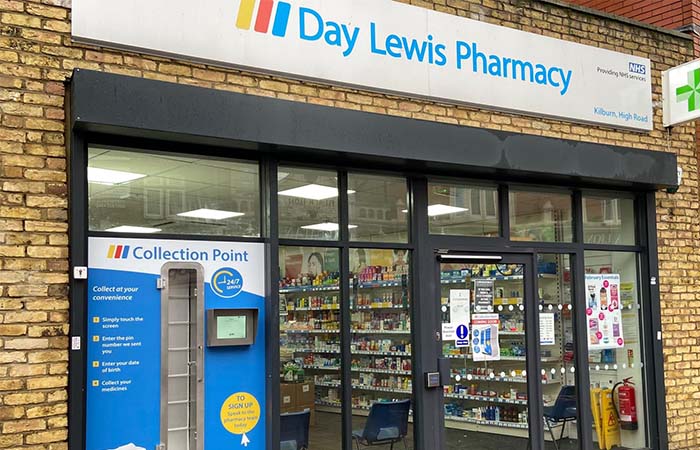
IT and automation are cited as key investment areas, particularly hub-and-spoke dispensing – which Day Lewis said “took some time to bed down” but is now aiding growth – “and 24/7 prescription collection kiosks “in certain of our pharmacies”.
Day Lewis said its long-term objectives are to “be the pharmacy destination of choice locally for prescriptions and services” while maintaining a “high quality” estate, as well as growing its OTC manufacturing business in international markets and diversifying investment in “other pharmacy-related sectors”.
In terms of margin, it seeks to improve purchasing mix between branded and generic medicines, control stock efficiently and increase services income.
“Our priority throughout our operations is the safety and wellbeing of our patients,” said Mr Patel.